Letta's next phase
Every closed foundation lab today is moving towards developing not just models, but also agents: the harness around models that enables computer use, memory, skills, subagents, and failure recovery.
The most powerful harnesses today leverage computer use, injecting agents into environments where they are free to execute scripts and modify state. Computer use has been an inflection point that has enabled significantly more general-purpose and powerful agents.
Letta has always been about memory and personalization. We made a bet at the start of this company that memory was the key to self-improving artificial intelligence, and we are now applying that focus to the next generation of agent systems. With Letta Code, we are building memory systems into an open, model-agnostic agent harness.
Letta Code is our flagship
Letta Code is a model-agnostic agent harness with persistent memory. It gives underlying language models frontier "agent" capabilities - computer use, skills, subagents, transparent memory systems, and deployment paths - that are not tied to a single lab or model provider.
The closed labs are all moving in the same direction. OpenAI is building computer use directly into its Responses API. Anthropic has Claude Code and the Agent SDK. Google has Gemini CLI and a handful of other agent API/SDK products.
We think the world needs a different option: Letta Code and the Letta Code SDK as an open, extensible runtime that works with every model. You own the memory. You choose the model. You can see how the system works, down to the exact input and output tokens of the LLM itself.
What gets better
Letta is focusing on the primitives that allow anyone to deploy stateful agents with real memory that isn't locked down to a single provider.
Memory moves from specialized memory tools that edit memory in a database to generalized computer use tools like bash that operate over memory projected into git-backed files (context repositories) - aka "MemFS".
Sleep-time compute gets more powerful. We pioneered the idea that agents should reflect, consolidate, and improve automatically. Now those workflows move client-side, where they can use the same computer, tools, and context.
Agent orchestration moves from pure server-side messaging to dynamic subagents and skills. Work can now be delegated, executed, and composed across agents.
Skills become the primary way to package and reuse agent capabilities. They are composable, efficient, and better aligned with how agents learn over time.
The Letta Code SDK makes these systems deployable at scale. The core API exposes the fundamental primitives around the agent. The SDK allows developers to build on an open agent harness that not only affords frontier coding and computer-use performance, but also is memory-first: designed to build agents that actually learn and grow over time, and whose lifespans far exceed that of any underlying model.
What we are leaving behind
Many of our older features were built for a world where computer use was not the primary mechanism for agent action. They served their purpose - our original server-side agent pattern was designed to support a limited scope of what agents could do. Agent capabilities have grown far beyond our original design, and we are refocusing Letta around supporting and expanding those capabilities.
We are sunsetting a set of server-side features in favor of stronger client-side and runtime-native replacements:
- Letta Filesystem becomes actual filesystem access, context repositories, and computer use.
- Legacy server memory tools like core_memory_replace will be removed in favor of straightforward filesystem operations on git-backed context repositories.
- Templates will be replaced by versioned Letta Code SDK and community tooling like lettactl.
- Identities move to the application layer using tags.
- Server-side MCP integrations give way to client-side skills.
- Server-side sleep-time agents will be replaced by a client-side subagent system.
- Hardcoded server-side multi-agent tools give way to subagents, dynamic agent-discovery skills that build on general-purpose API patterns.
- Tool rules (which constrain agent actions based on hard-coded rulesets) are deprecated to avoid inhibiting frontier capabilities.
Transition path
We are focusing Letta on the execution model that best supports frontier agents. This shift gives agents more capability, more transparency, and more room to improve over time. We will make the transition practical with migration guides, office hours, direct support in Discord, Ezra, and clear timelines for every immediate and phased change.
Users should expect deprecation of some features like tool rules and legacy tools immediately, while more major features like templates and filesystem will be deprecated by mid-April.
If you have questions about these changes or how they affect your systems, we want to hear from you.
The mission
Letta builds agents that learn. Agents with persistent memory, real computer access, and the infrastructure to improve from their own lived experience and work. Letta Code is the runtime that brings these together: git-backed memory, skills, subagents, and deployment that works across every model provider.

Traditional LLMs operate in a stateless paradigm—each interaction exists in isolation, with no knowledge carried forward from previous conversations. Agent memory solves this problem.

As AI agents become more sophisticated, understanding how to design and manage their context windows (via context engineering) has become crucial for developers.

Memory blocks offer an elegant abstraction for context window management. By structuring the context into discrete, functional units, we can give LLM agents more consistent, usable memory.

Although RAG provides a way to connect LLMs and agents to more data than what can fit into context, traditional RAG is insufficient for building agent memory.

Introducing “stateful agents”: AI systems that maintain persistent memory and actually learn during deployment, not just during training.


Today we’re launching the Letta Code app, a new way to interact with deeply personalized agents that learn over time and work locally on your machine.
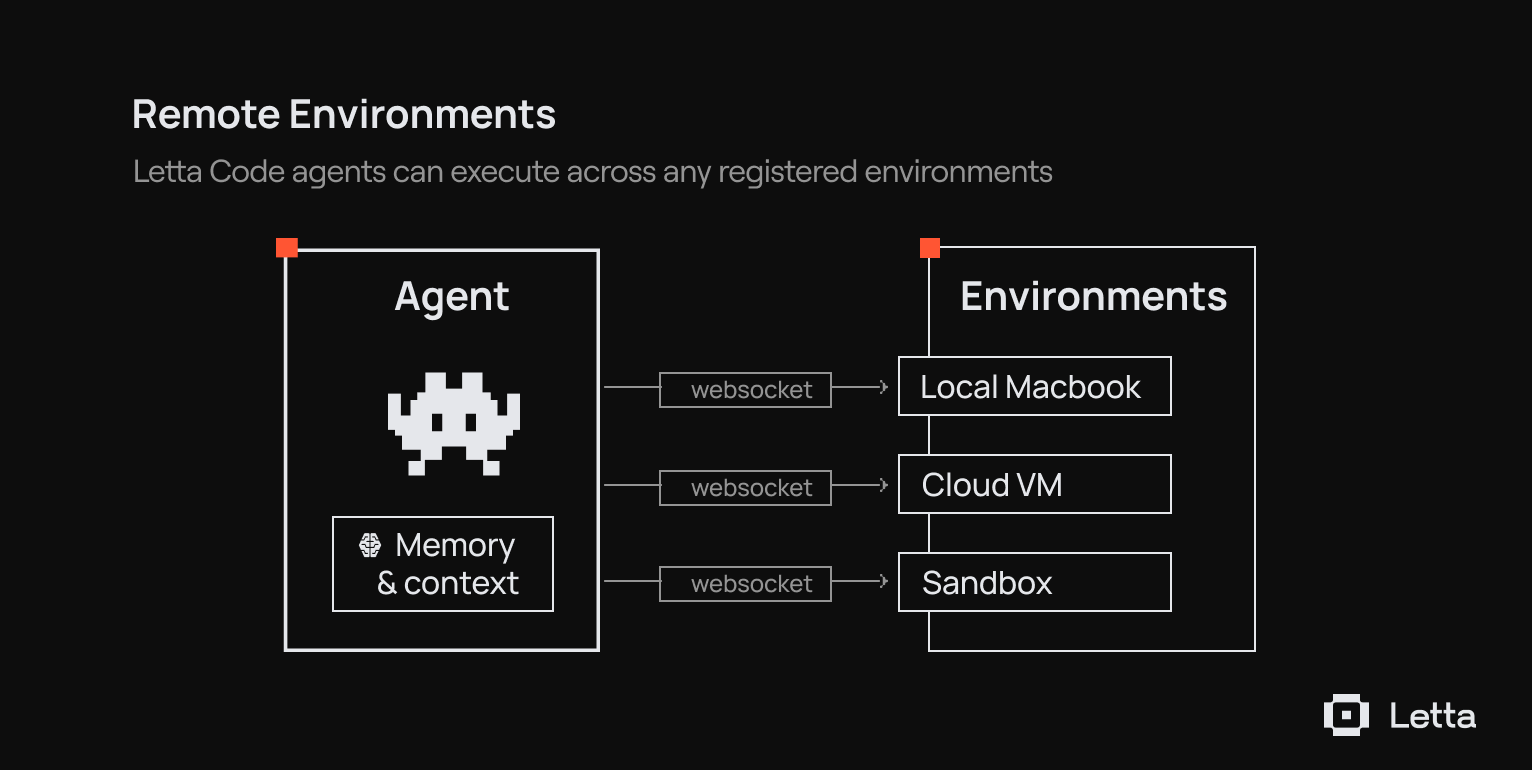
Using remote environments, you can message an agent working on your laptop from your phone.
The Conversations API allows you to build agents that can maintain shared memory across parallel experiences with users
Introducing Letta Code, a memory-first coding agent. Letta Code is the #1 model-agnostic open source agent on the leading AI coding benchmark Terminal-Bench.

The Letta API now supports programmatic tool calling for any LLM model, enabling agents to generate their own workflows.
Introducing Letta Evals: an open-source evaluation framework for systematically testing stateful agents.
Introducing Letta's new agent architecture, optimized for frontier reasoning models.
Letta agents can now take full advantage of Sonnet 4.5’s advanced memory tool capabilities to dynamically manage their own memory blocks.
Today we're announcing Letta Filesystem, which provides an interface for agents to organize and reference content from documents like PDFs, transcripts, documentation, and more.

We've releasing new client SDKs (support for TypeScript and Python) and upgraded developer documentation

Introducing Agent File (.af): An open file format for serializing stateful agents with persistent memory and behavior.

Introducing the Letta Agent Development Environment (ADE): Agents as Context + Tools

Letta v0.6.4 adds Python 3.13 support and an official TypeScript SDK.

Letta v0.5.2 adds tool rules, which allows you to constrain the behavior of your Letta agents similar to graphs.

Letta v0.5.1 adds support for auto-loading entire external tool libraries into your Letta server.



Today we are releasing the Context Constitution: a set of principles governing how AI agents manage context to learn from experience.
.png)
We're introducing Context Repositories, a rebuild of how memory works in Letta Code based on programmatic context management and git-based versioning.

At Letta, we believe that learning in token space is the key to building AI agents that truly improve over time. Our interest in this problem is driven by a simple observation: agents that can carry their memories across model generations will outlast any single foundation model.
Today we’re releasing Skill Learning, a way to dynamically learn skills through experience. With Skill Learning, agents can use their past experience to actually improve, rather than degrade, over time.
Today we're releasing Skill Use, a new evaluation suite inside of Context-Bench that measures how well models discover and load relevant skills from a library to complete tasks.
We are open-sourcing Context-Bench, which evaluates how well language models can chain file operations, trace entity relationships, and manage multi-step information retrieval in long-horizon tasks.
We're excited to announce Recovery-Bench, a benchmark and evaluation method for measuring how well agents can recover from errors and corrupted states.
Letta Filesystem scores 74.0% of the LoCoMo benchmark by simply storing conversational histories in a file, beating out specialized memory tool libraries.
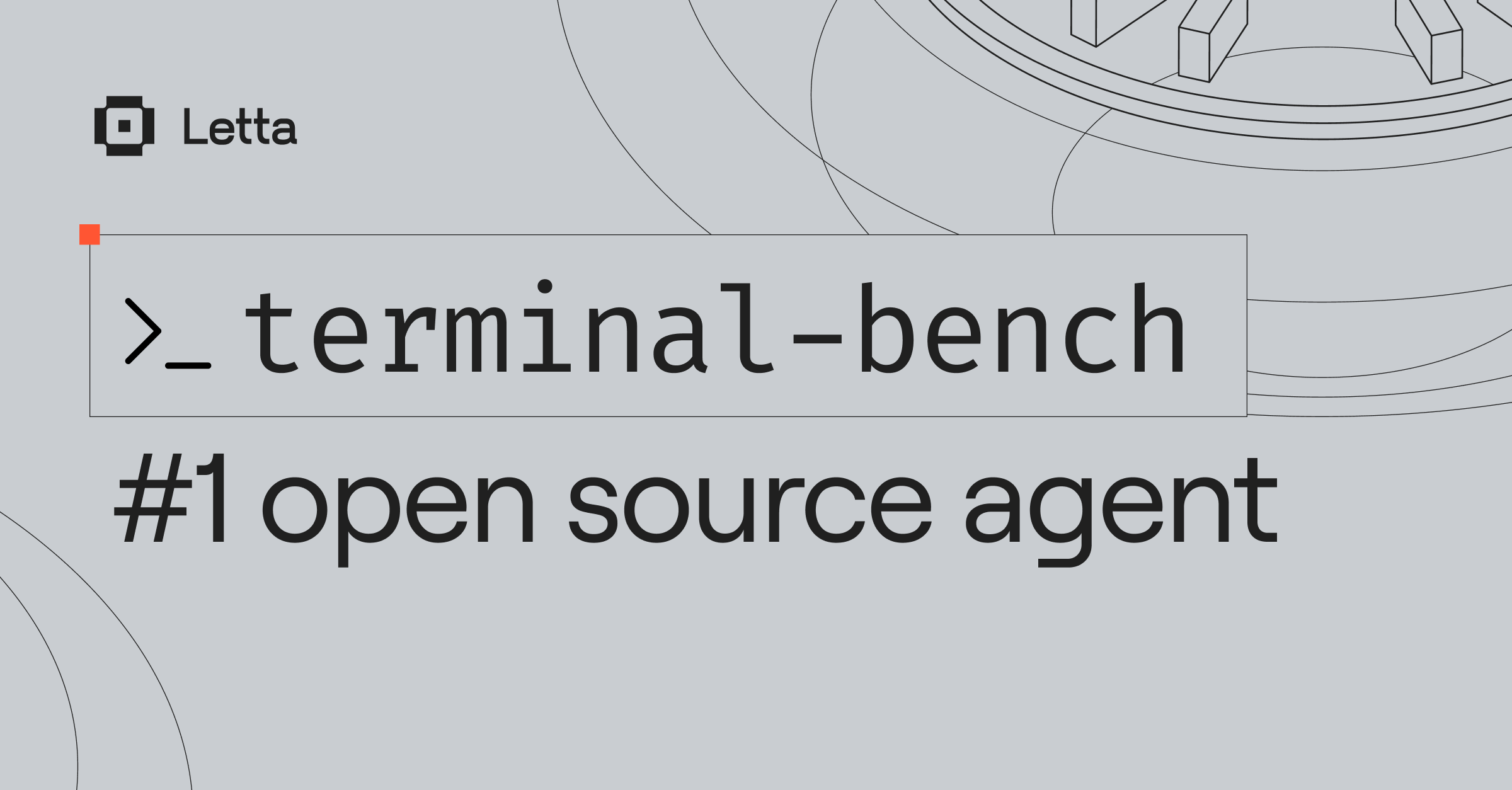
We built the #1 open-source agent for terminal use, achieving 42.5% overall score on Terminal-Bench ranking 4th overall and 2nd among agents using Claude 4 Sonnet.

